Flow Temple
A moxibustion learning platform built around clear lessons, point references, and a guided introduction for beginners.
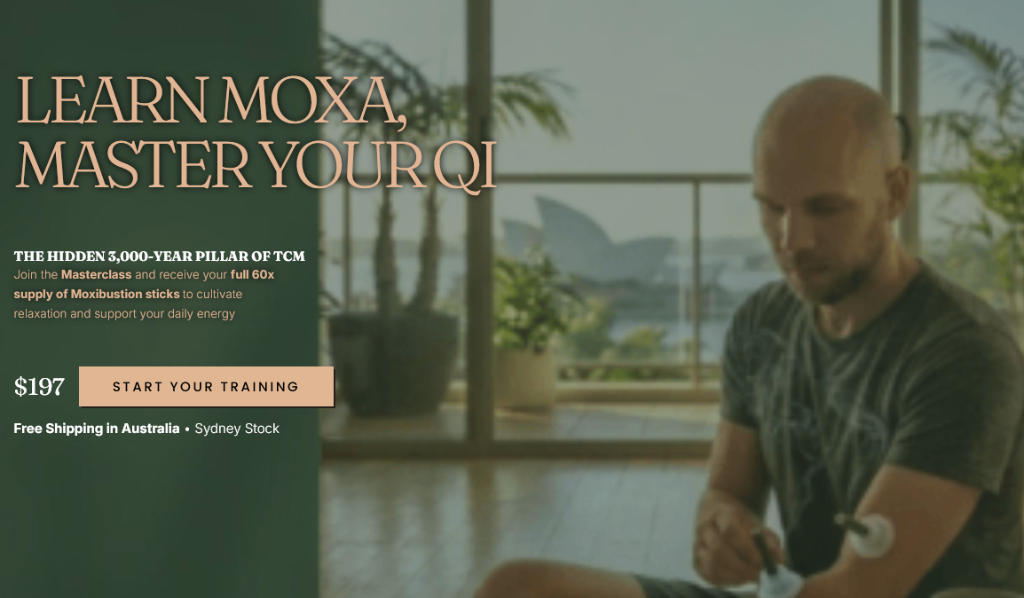
An earlier Flow Temple platform; the current application has since moved to Next.js.
Overview
Flow Temple began as a place to organize my own learning about moxibustion and Traditional Chinese Medicine. I now use it to design and build a clearer learning path for beginners: plain-language articles, a point atlas, a guided introduction, a short course, and a Starter Kit.
The current application is built with Next.js. It follows an earlier WordPress version that combined course content, products, and marketing tools. That earlier platform taught me about operating a real product; the current work concentrates on how people understand unfamiliar material and its limits.
Why I Built It
Over the years I became interested in a range of practices including yoga, meditation, massage, movement, and Traditional Chinese Medicine.
Rather than keeping these interests scattered across books, courses, and notebooks, I wanted a place to organize what I was learning and experiment with different ways of sharing it.
Flow Temple became that space.
One motivation was the observation that while acupuncture is widely recognized, moxibustion remains relatively unknown despite being part of the same tradition.
Core Question
How can traditional knowledge be shared online without losing the depth, context, and practical experience that make it valuable?
How It Works
The Next.js build brings together a Guide, learning articles, and a Point Atlas. The Guide connects everyday language to authored traditional references and point-location material. General learning comes first; suitability checks and safety stops govern when more specific material is shown.
The course offers seven short lessons, while the Starter Kit supports practical learning. Product-specific home instructions remain separate from general education until they have the required review. The site presents traditional wellness education, not diagnosis or medical advice.
Earlier Platform
The previous WordPress site used WooCommerce, LearnPress, Mailchimp, and supporting hosting tools. Those systems belong to the project history rather than the current application.
Key Components
Educational Content
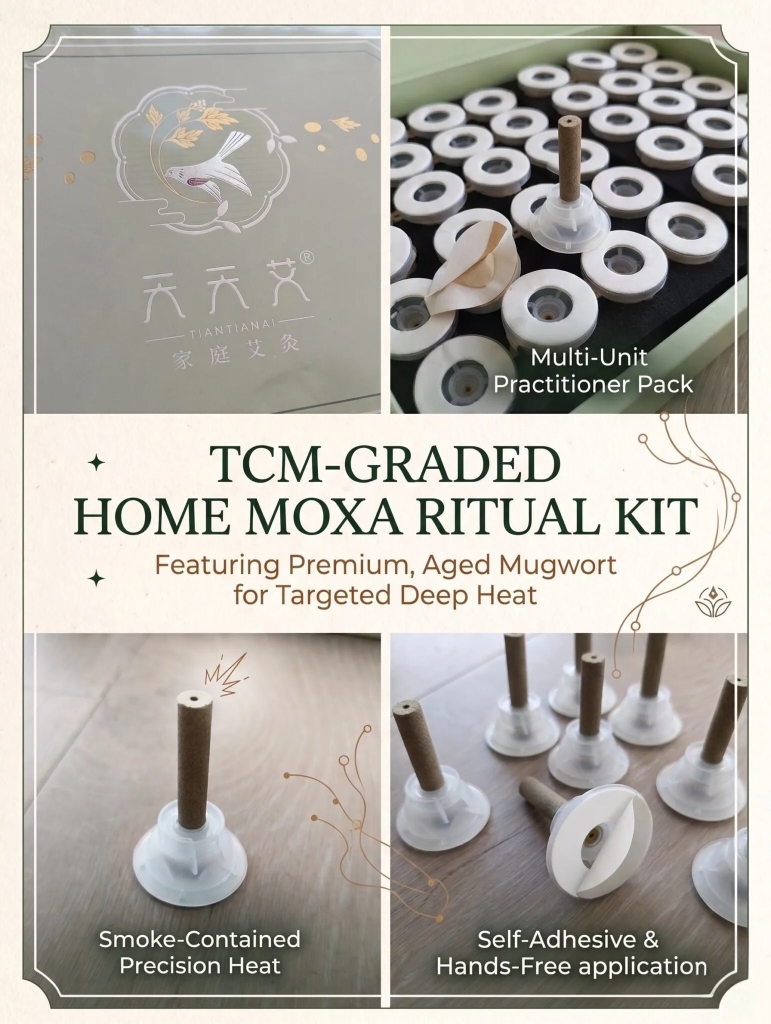
Writing and organizing beginner-focused material on moxibustion, traditional concepts, and point locations.
Ecommerce
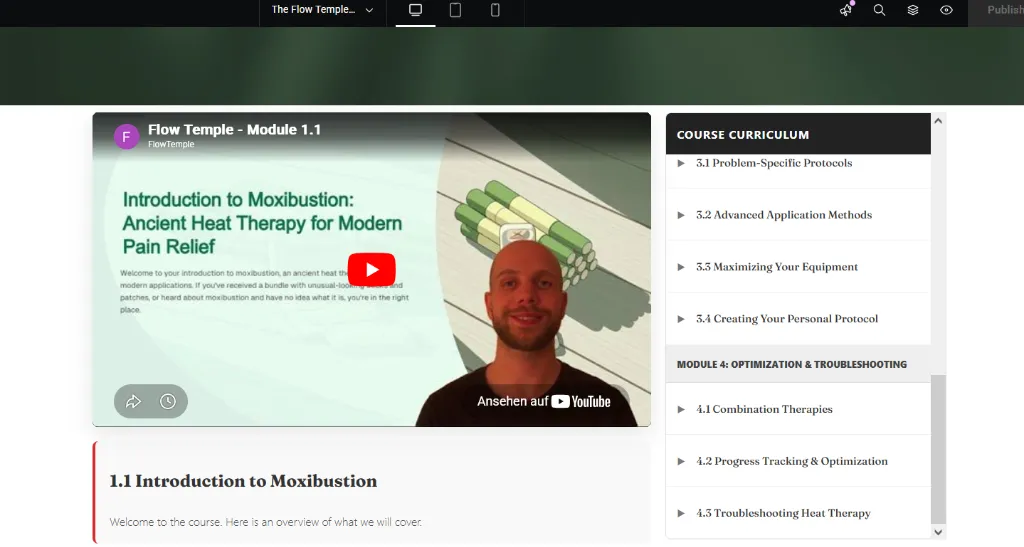
The Starter Kit is offered alongside the learning material as an optional way to support practice.
AI-Assisted Learning
The current Guide uses authored topic matching and references to help visitors explore unfamiliar concepts. Moxa Point Finder is a separate earlier conversational AI experiment.
Current Status
The current Flow Temple application uses Next.js. I continue to refine the Guide, lessons, Point Atlas, and how the Starter Kit fits into a careful beginner journey.
Lessons Learned
The platform has changed repeatedly, but the question has stayed with me: how do you make traditional knowledge approachable without flattening its context or overstating what a digital guide can do? Building the current experience has made clear how much that depends on thoughtful structure, source boundaries, and plain language.
Technology Stack
The current application uses Next.js, React, TypeScript, and Tailwind CSS. Its learning journey includes authored Guide logic, point references, course access, and a Stripe checkout handoff. The earlier WordPress, WooCommerce, LearnPress, and Mailchimp stack formed the previous phase of the project.